 en
en
 العربية
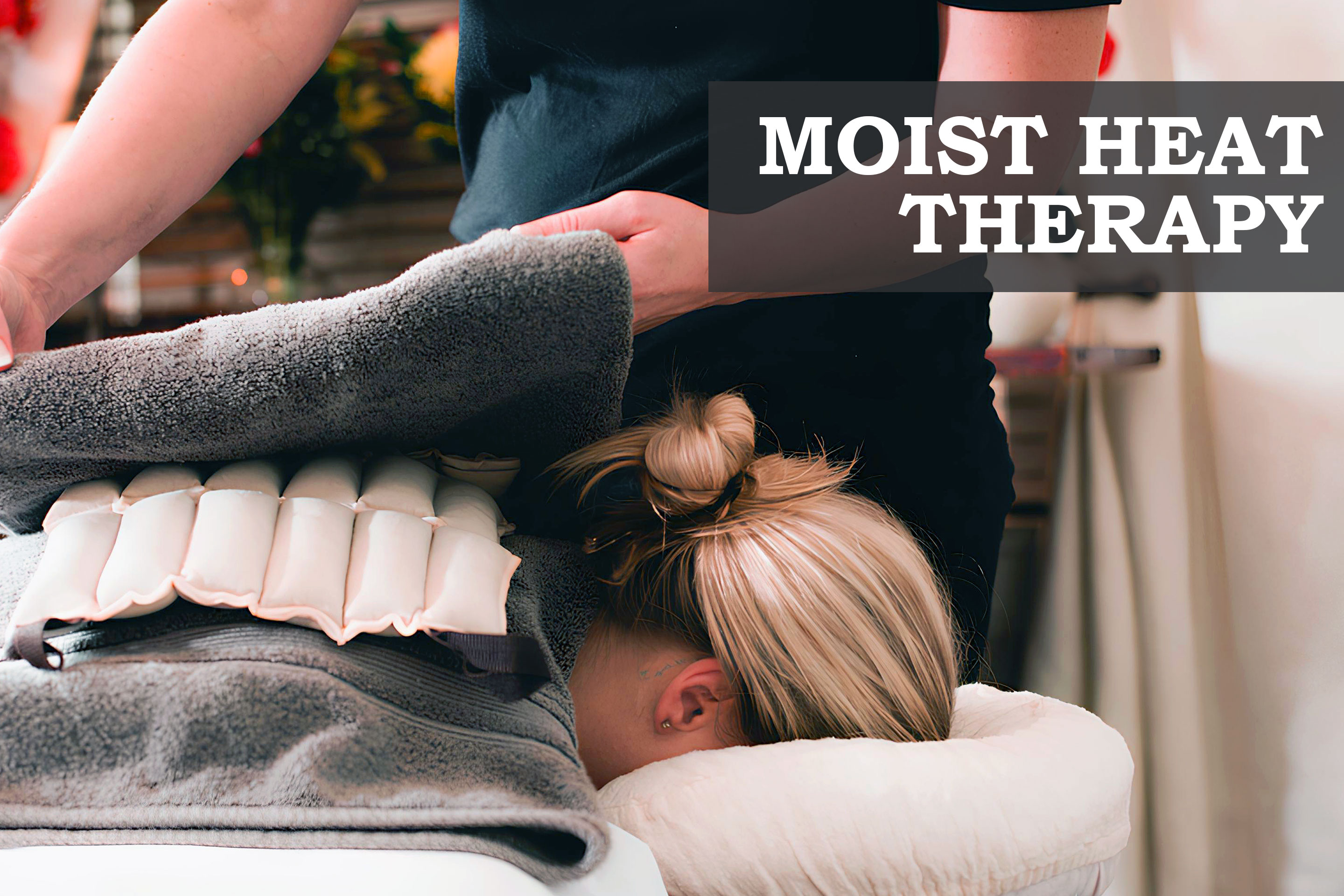


Moist Heat Therapy in Physiotherapy
Share :
Moist Heat Therapy in Physiotherapy
In physiotherapy, moist heat refers to a heat
treatment that uses water or steam
to transfer heat to the body. It’s commonly used to relax muscles, reduce pain, and improve blood flow.
Moist
heat delivers warmth through damp or
wet sources, which allows heat to penetrate tissues more effectively
than dry heat.
Types / Forms of Moist Heat
Common
clinical applications include:
A. Hot Moist Packs (Hydro collator Packs)
-
Stored in hydro collator tank at 70–75°C (158–167°F)
-
Wrapped in towels (6–8 layers)
-
Provides deep, comfortable heat
B. Paraffin Wax Bath (Moist Heat Effect)
-
Useful for hands/feet
-
Combines heat + skin moisturizing
C. Warm Whirlpool Therapy
-
Hydrotherapy tanks for limbs or whole
body
-
Provides heat + gentle movement
D. Steam Towels
-
Hot towels replaced frequently to
maintain temperature
E. Contrast Bath (warm phase)
-
Alternating warm and cold immersion
Moist
heat transfers heat more efficiently
and penetrates slightly deeper
than dry heat.
Physiological Effects of Moist Heat
Moist
heat produces:
Vasodilation
-
Increased blood flow
-
Enhanced oxygen & nutrient delivery
-
Removal of metabolic waste
Increased Tissue
Extensibility
-
Collagen softening
-
Improved joint range of motion
Reduction of Muscle
Spasm
-
Decreased gamma motor neuron activity
-
Relieves guarding
Pain Reduction
-
Via gate control mechanism
-
Relaxation effect
Increased Sweating & Skin Hydration
-
Improves tissue pliability
Indications for Moist Heat Therapy
Moist heat is generally indicated for subacute and chronic conditions, NOT
for acute inflammation.
A. Musculoskeletal Indications
-
Chronic muscle spasm
-
Myofascial tightness
-
Chronic tendonitis
-
Chronic ligament sprain
-
Low back pain (non-acute)
-
Neck stiffness
-
Post-immobilization stiffness
-
Joint contractures (as preparation for
stretch)
B. Joint & Arthritic Conditions
-
Osteoarthritis
-
Rheumatoid arthritis (inactive/chronic
stage)
-
Chronic synovitis
-
Post-fracture stiffness (when healing
stable)
C. Neurological Indications
-
Mild spasticity (to reduce tone
temporarily)
-
Radiculopathy (non-acute phase)
D. Circulatory / Soft Tissue Conditions
-
Scar tissue mobilization (chronic)
-
Fibromyalgia flare management (not
acute)
-
Chronic bursitis
-
Chronic tendinopathy
E. Preparatory Use
Before:
-
Stretching
-
Joint mobilization
-
Manual therapy
-
Strength or ROM exercises
Contraindications of Moist Heat Therapy
A. Absolute Contraindications
-
Acute
inflammation or injury (first 48–72 hrs)
-
Open wounds (unless using
sterile hydrotherapy)
-
Impaired or
absent sensation
-
Diabetic neuropathy
-
Peripheral neuropathy
-
Poor
peripheral circulation / vascular insufficiency
-
Active
infection
-
Malignancy in
treatment area
-
Recent/active
bleeding
-
Severe edema (may worsen with
heat)
-
Blood clot / thrombophlebitis
-
Over ischemic
skin
B. Relative Contraindications
Use
caution in:
-
Pregnancy (avoid abdominal/lumbar
region)
-
Advanced cardiac conditions
-
Hypertension
-
Metal implants (depends on depth &
heat source)
-
Elderly or frail skin
-
Cognitive impairment (poor
communication)
-
Immediately after vigorous exercise
-
Over areas with recent corticosteroid
injection
Risk Factors & Potential Adverse Effects
Even
when used correctly, moist heat may pose risks.
A. Burns (Most Common Risk)
Caused
by:
-
Too few towel layers
-
Excessive hydro collator pack
temperature
-
Prolonged exposure
-
Patient lying on heat pack
-
Poor sensation
B. Skin Irritation
-
Erythema
-
Blistering
-
Scalding
C. Increased Swelling
-
If used in acute injury or active
synovitis
D. Hypotension, Dizziness
-
Due to systemic vasodilation
-
Especially after whirlpool therapy
E. Infection Spread
-
When heat used over infectious or
inflamed tissue
F. Increased Pain
-
If heat aggravates inflammation or
nerve irritation
G. Dehydration (rare)
-
Especially with prolonged whirlpool or
steam exposure
Precautions for Safe Use
Before Treatment
-
Check skin integrity & sensation
-
Verify temperature
(hydrocollator between 70–75°C)
-
Always use 6–8 towel layers
-
Explain procedure to patient
During Treatment
-
Check skin every 5 minutes
-
Monitor patient for discomfort,
dizziness
-
Avoid patient weight on heat pack
-
Maintain clean whirlpool tank water
Duration
-
Typical: 15–20 minutes
After Treatment
-
Inspect skin for burns/redness
-
Proceed with stretching or exercises
while tissues warm
Vishnumaya K B
Physiotherapist
Dr. P. Alikutty's Ayurveda and Modern Hospital - Kottakkal


