 en
en
 العربية
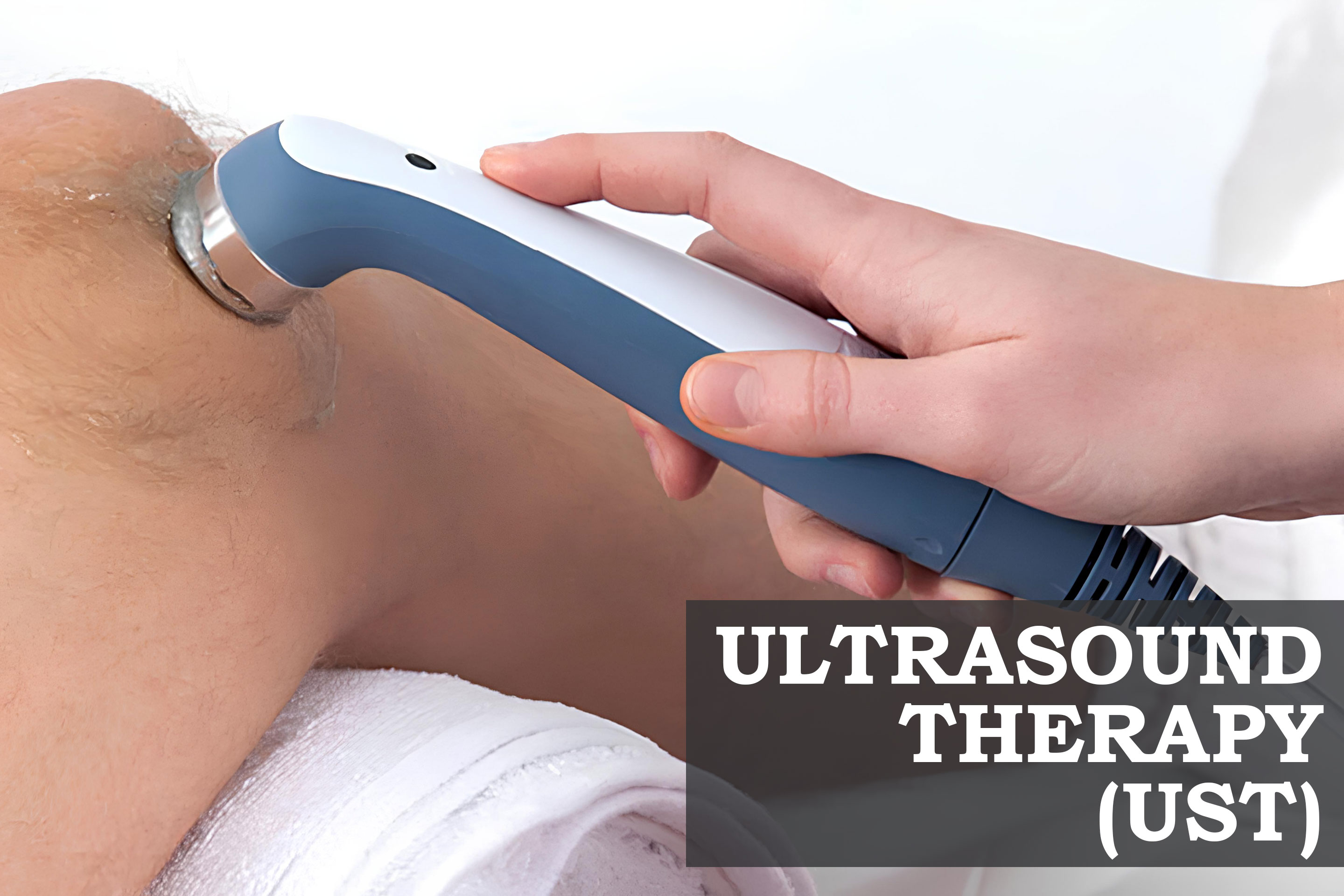


ULTRASOUND THERAPY (UST)
Share :
1. INTRODUCTION
-
UST -modality using high-frequency sound waves (1–3 MHz).
-
Produces thermal and non-thermal effects.
-
Helps in pain relief, healing, and tissue repair.
2. USES / EFFECTS
Thermal Effects
-
↑ Tissue temperature
-
↓ Pain & muscle
spasm
-
↑ Blood flow
-
↑ Tissue extensibility
Non-Thermal Effects
-
Cavitation & micro-streaming
-
↑ Cell membrane
permeability
-
↑ Healing response
-
Enhances drug delivery (phonophoresis)
3. INDICATIONS
-
Tendinitis /
Tendinopathy
-
Bursitis
-
Muscle strain / tears
-
Ligament sprain
-
Myofascial pain
-
Plantar fasciitis
-
Joint contracture /
restricted ROM
-
Scar tissue,
adhesions
-
Chronic inflammatory
conditions
4. CONTRAINDICATIONS
-
Malignant tumors
-
Over pregnant uterus
-
Active infection
-
Thrombophlebitis /
DVT
-
Over eyes /
reproductive organs
-
Over electronic
implants (pacemaker area)
-
Over epiphyseal
growth plates (children – high intensity)
-
Over fractures
(except low-intensity pulsed)
5. RISK FACTORS / SIDE EFFECTS
-
Burns if head not
moved
-
Tissue overheating
-
Increased pain from
high intensity
-
Skin irritation from
gel (rare)
-
Cavitation injury
(improper technique)
6. PRECAUTIONS
-
Keep sound head moving continuously
-
Use correct frequency:
o 1 MHz = deep tissues
o 3 MHz = superficial tissues
-
Use pulsed mode for acute conditions
-
Use continuous mode for chronic conditions
-
Avoid bony
prominences with high intensity
-
Monitor patient’s
sensation and pain
-
Always use adequate coupling medium (gel)
MUHAMMED THUFAIL T
Physiotherapist
Dr. P. Alikutty's Ayurveda and Modern Hospital - Kottakkal


