 en
 العربية
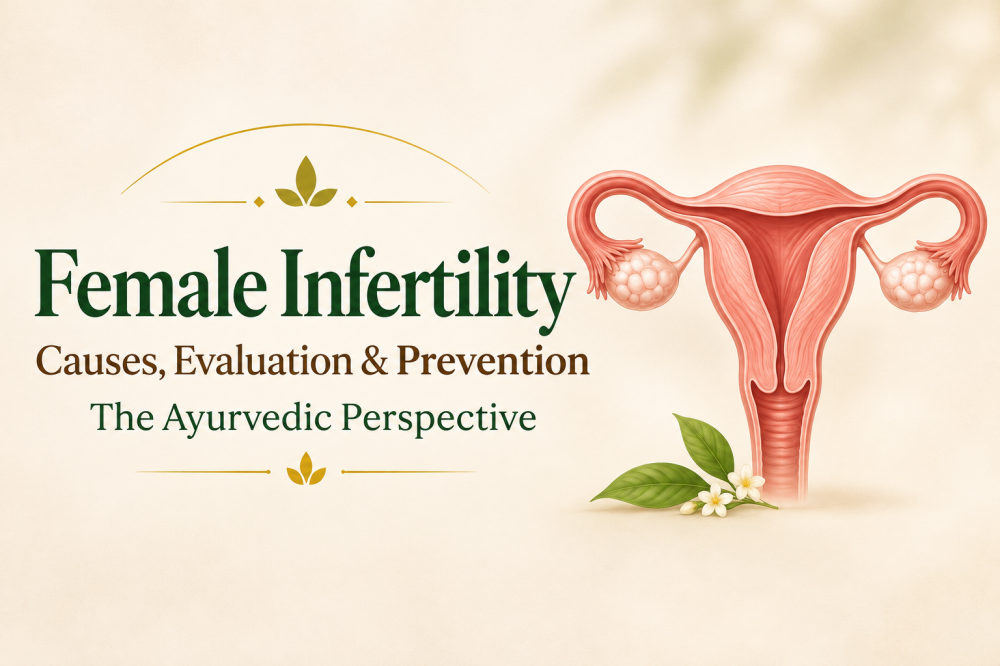


Female Infertility: Causes, Diagnosis and the Ayurvedic Perspective
Share :
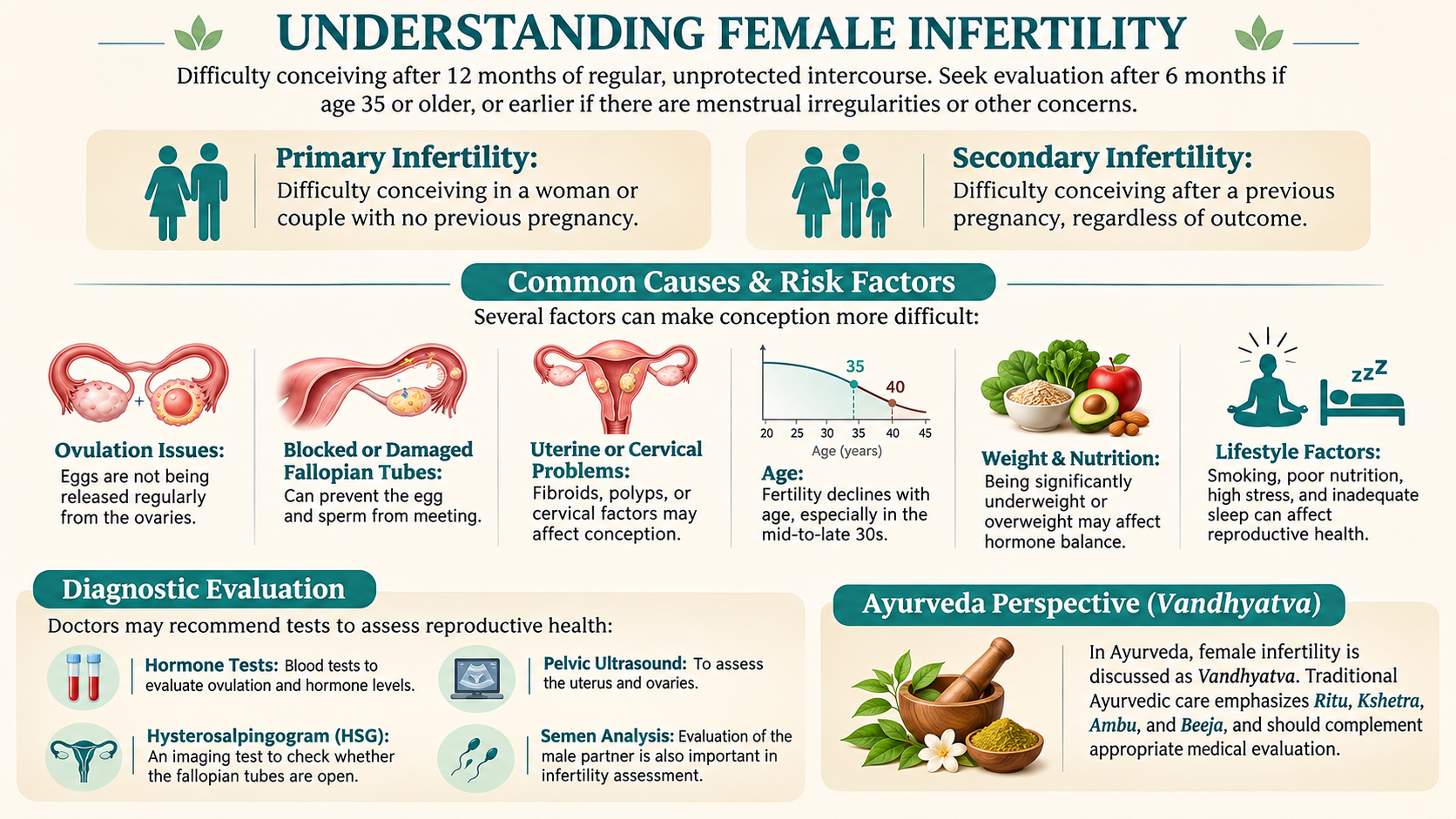
Infertility is generally defined as the inability to achieve a pregnancy after 12 months or more of regular, unprotected sexual intercourse. Evaluation is usually recommended after 6 months if the female partner is aged 35 or older. Women over 40, or anyone with known fertility-related concerns, may need earlier assessment.
Although this article focuses on female infertility, difficulties conceiving may involve female factors, male factors, both partners and unexplained causes. A balanced evaluation is important.
Types of Infertility
- Primary infertility: Difficulty conceiving when there has been no previous pregnancy.
- Secondary infertility: Difficulty conceiving following a previous pregnancy, regardless of its outcome.
Common Causes and Risk Factors
Several factors can affect the ability to conceive:
- Ovulation problems: Irregular or absent release of eggs from the ovaries, sometimes associated with conditions such as polycystic ovary syndrome (PCOS).
- Blocked or damaged fallopian tubes: Tubal damage may prevent the egg and sperm from meeting.
- Uterine or cervical conditions: Certain fibroids, polyps or other structural problems may affect fertility.
- Age: Fertility naturally declines with age, particularly during the mid-to-late 30s.
- Weight and diet: Being significantly underweight or overweight may affect reproductive hormones and ovulation.
- Lifestyle factors: Smoking, inadequate nutrition, chronic stress and poor sleep may affect overall reproductive health.
How Is Infertility Diagnosed?
A clinician recommends investigations based on medical history, age, menstrual patterns and examination findings. Tests may include:
- Hormone tests: Selected blood tests, when indicated, to investigate ovulation or underlying hormonal concerns.
- Pelvic ultrasound: Imaging to examine the uterus, ovaries and selected reproductive structures.
- Hysterosalpingography (HSG): A contrast X-ray procedure used to assess whether the fallopian tubes are open.
- Semen analysis: Where a male partner is contributing to pregnancy, evaluating sperm is an important part of the initial fertility assessment.
Not everyone requires every test. A qualified fertility specialist can recommend appropriate investigations and explain the results.
Understanding Infertility in Ayurveda: Vandhyatva
In classical Ayurvedic descriptions, infertility is discussed under the concept of Vandhyatva. Ayurveda uses an analogy of planting a seed to explain four traditional considerations for conception:
- Ritu (timing): The appropriate reproductive time or fertile period.
- Kshetra (field): The reproductive environment, particularly the uterus and related structures.
- Ambu (nourishment): Adequate nourishment and support for reproductive processes.
- Beeja (seed): The reproductive contributions of the egg and sperm.
These are traditional Ayurvedic concepts and should not be interpreted as substitutes for modern clinical explanations or diagnostic testing.
Traditional Ayurvedic Views on Imbalance
- Doshas: Classical Ayurveda describes Vata, Pitta and Kapha, including Apana Vata, in discussions of reproductive function.
- Agni, Ama and Srotas: These traditional concepts are used to describe digestion, internal balance and bodily channels. They are not scientifically established explanations for fallopian tube blockage, hormonal disorders or infertility.
- Lifestyle and stress: Nutrition, rest and stress management are relevant to general well-being, but infertility often requires investigation for specific medical causes.
Traditional Ayurvedic Approaches
Ayurvedic practitioners may discuss individualized traditional approaches. Their clinical benefits and risks for infertility require careful assessment, and they must not delay evidence-based fertility care.
1. Shodhana (Traditional Cleansing Practices)
Shodhana may include Panchakarma in traditional practice. There is insufficient reliable clinical evidence that these practices remove reproductive “toxins,” reopen blocked fallopian tubes or reliably treat infertility.
2. Uttaravasti (Traditional Intrauterine Procedure)
Uttaravasti is described in some Ayurvedic traditions as a procedure involving administration of preparations into the reproductive tract. Its effectiveness for tubal blockage, PCOS or infertility is not established. Procedures involving the uterus can carry safety risks and must not be attempted without appropriate specialist assessment, infection-control safeguards and informed consent.
3. Shamana (Traditional Herbal Approaches)
Texts and traditional practice discuss preparations such as Pushpadhanva Rasa, Kanchanara Guggulu and Prajasthapana formulations. These examples are provided for educational context, not as general recommendations. Reliable evidence that they restore ovulation or normalize hormones in people with infertility is insufficient. Herbal and mineral-containing products may also cause adverse effects or interact with medications.
4. Rasayana (Traditional Rejuvenation)
Rasayana emphasizes nourishment, lifestyle practices and restoration of well-being in classical Ayurvedic descriptions. Healthy habits may support general health, but claims that Rasayana improves egg quality or guarantees conception have not been established by reliable clinical evidence.
When to Seek Medical Advice
Seek fertility evaluation after 12 months of trying if the female partner is younger than 35, or after 6 months if she is 35 or older. Assessment may be appropriate sooner for women over 40 or those with irregular menstrual cycles, known reproductive conditions, recurrent pregnancy loss or suspected male-factor infertility.
Conclusion
Infertility can have several contributing factors, and timely evaluation can help identify appropriate options. Ayurveda offers a traditional framework for discussing reproductive health, but traditional therapies should not be presented as proven treatments for blocked tubes, ovulation disorders or infertility. Individualized clinical evaluation and qualified medical guidance remain essential.
Prepared by: Dr. Soumya, BAMS, Dr. P. Alikutty’s Ayurveda & Modern Hospital, Kottakkal.
Medical disclaimer: This article is for general health education only and does not replace medical advice, diagnosis or treatment. Fertility-related tests, procedures and medicines should be discussed with qualified healthcare professionals.


