 en
en
 العربية


THYROID DISORDERS
Share :
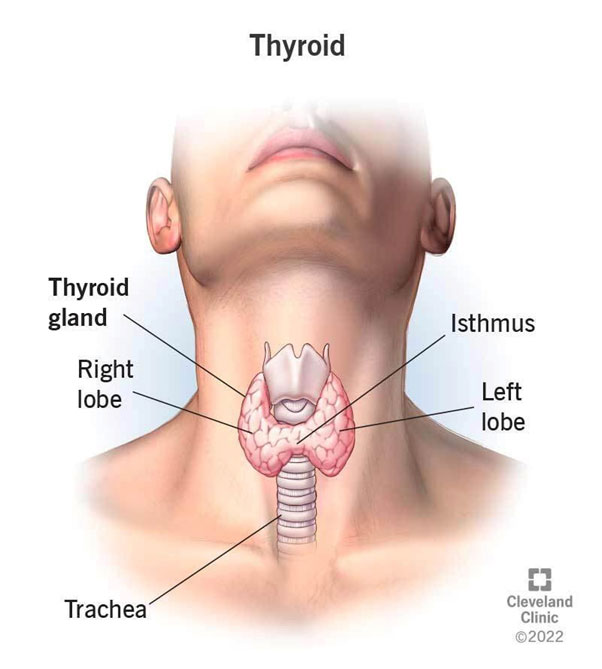
Thyroid is a butterfly shaped endocrine gland located in the neck. The normal function of the thyroid gland is to produce and release thyroid hormones, primarily T3 (triiodothyronine) and T4 (thyroxine), which regulate the body's metabolism, growth, and development. It also produces calcitonin, which helps regulate blood calcium levels.
What are the Types?
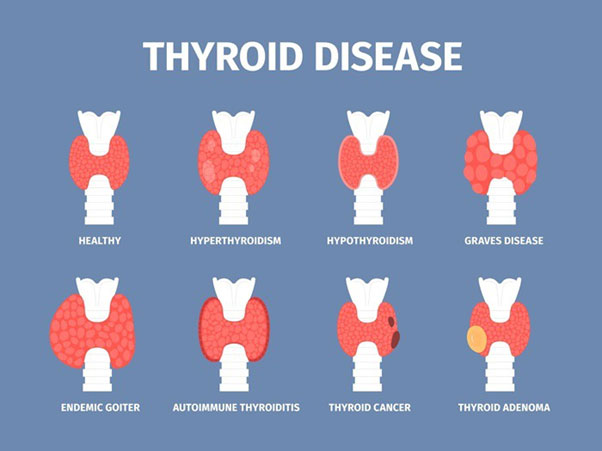
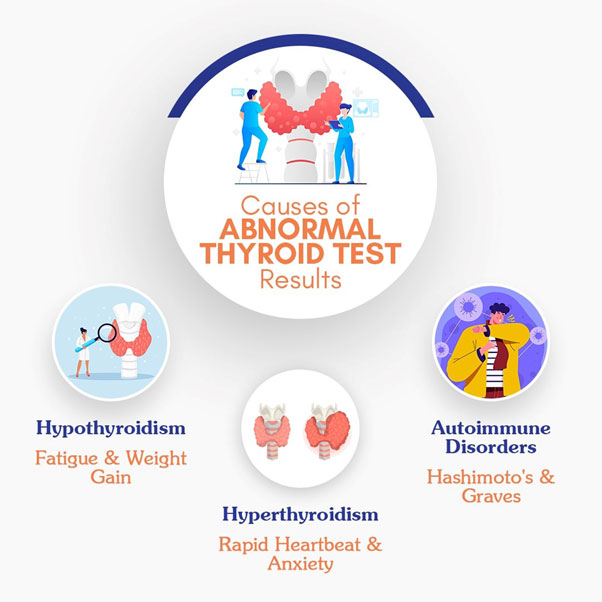
Common thyroid disorders are Hypothyroidism and Hyperthyroidism. Usually people are not aware of the differences between these two conditions.
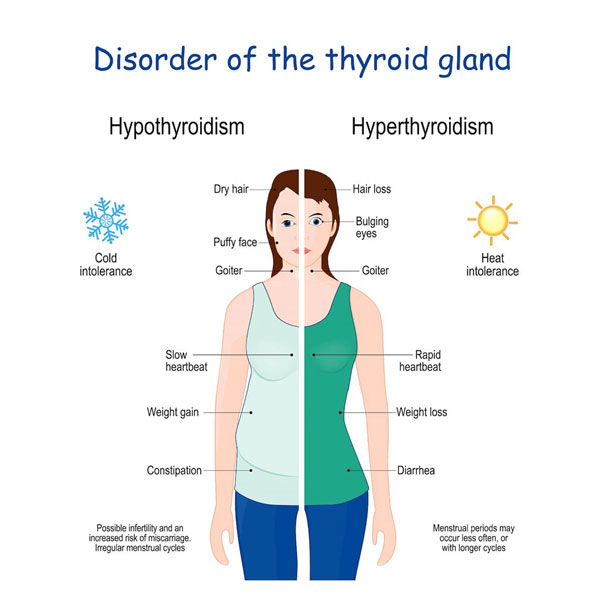
Hyperthyroidism features are
Weight loss,
increase appetite, heat intolerance, tachycardia, palpitation, diarrhea,
anxiety,
Insomnia, nervousness, irritability,
tremors, increased hair and nail growth, increased sweating.
Hypothyroidism features are weight gain, decreased appetite, cold intolerance, bradycardia, constipation, depression, impaired memory, impaired concentration, hair loss and thin nails, dry skin.
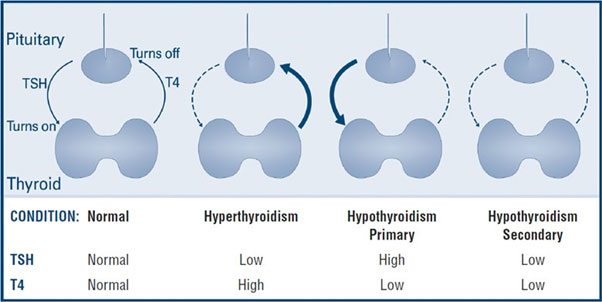
For clinical diagnosis thyroid function test can be done.
In ayurvedic view
Ayurveda
describes thyroid disorders based on doshas. Hypothyroidism has been divided
into five classifications based on, whether it is caused by - Vata, Pitha,
Kapha or urinary tract infections (mostly in females) and finally the “goiter”
type, where a pronounced swelling of the gland can be seen around the neck
region. The “goiter” type is believed to be the advanced stage of Kapha induced
hypothyroidism. Improper digestion of food is considered as an underlying cause
for all the dosha induced hypothyroidism. In addition, the Vata induced
disorder has a psychological component from mental agitation and mental stress,
and a physical component from excessive physical activity. The hyperthyroidism
is attributed to pita only. Treatment is prescribed after ascertaining the root
cause of the disorder. For example, if the disorder is Kapha based, the medicines
will be given to bring the kapha dosha in the body to normal level. Therefore,
Ayurveda provides a patient centric approach for treatment
Whats
role of Ayurveda in thyroid disease?
Ayurvedic treatment for thyroid disorders offers a natural and holistic approach. Using herbs, diet, lifestyle changes, and yoga, Ayurveda helps restore thyroid balance. Whether you have hypothyroidism or hyperthyroidism, Ayurvedic remedies can improve your thyroid heal
Dr. Anjali T S
Medical Officer
Dr. P Alikutty’s Ayurvedha and
Modern Hospital - Kottakkal


